Censorship is required at times
| ∞
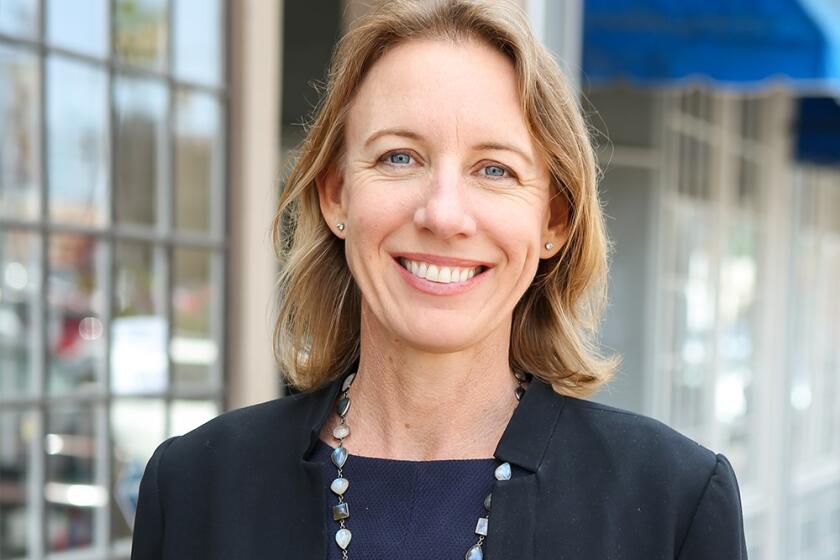
Dwight Thompson
Commentary
The Bonsall school district has been embroiled in heated debate in regard to books in its accelerated reading program. Some parents have expressed outrage at explicit sexual language; others contend that outlawing any written material harks back to the book-burning days of Salem. Is banning books with strong sexual content good judgment, or a violation of children's civil rights?
The refusal of a parent to feed an infant steak, lobster and beer is not a violation of the baby's civil rights; it's simply a matter of proper parenting. By the same token, a fourth-grader can't digest terms such as orgasm, masturbation, exhibitionism, lesbianism and nymphomania. Limiting children's reading material is not a violation of their rights; it's a protection of their innocence. Even local theaters censor attendance according to age. Should not local school districts do the same?
A double standard exists when schools suspend or expel a child for using four-letter words, then reward the same child for reading books containing the same words. Educators are sending mixed signals and compounding behavioral problems when they encourage children to read books in which the highlighted teen-age characters are foul-mouthed brats. Educational psychologists realize that books help shape the way children establish a sense of right and wrong, and help form patterns of speech and aggression as well.
While honing their reading skills, children should learn about the history of our great country, war heroes who gave their lives for our freedom, inventors, explorers, space travelers and nature studies. There is mystery, intrigue, drama, romance and high adventure in thousands of books for children that expand the imagination, inspire patriotism and build character. Why do schools have to include books that feature doped-up teen-agers hopping in and out of bed with each other at random, with their biggest mental challenge being trying to decide if they want to be gay or straight? ("Just Friends" and "Baby Be Bop"). What is the criterion for book selection? Is it to educate or to titillate? Is it to prepare children for the future or to entertain them for the present?
The rationale often used for allowing children to read books with inappropriate sexual content is that "it's part of the real world." Using this logic, paperbacks in the adult bookstore should be permissible because such material likewise depicts the real world ---- albeit one containing coprophilia, necrophilia, bestiality, sado-masochism and other demeaning sexual practices. No thinking individual can really believe that the mere existence of heinous activity is justification for making such material available to children.
It is hypocritical for schools to proclaim they have an "abstinence-based, family-life program" while they encourage children to read books glamorizing teen-age sexual free-for-alls. Such books make a mockery out of meaningful relationships and responsible behavior, and encourage premature experimentation. Only books with redeeming social values will reinforce a healthy sex education curriculum.
Given California's public school image crisis, with its embarrassing reading skills ranking of 49th in the nation, its reputation will only worsen if local school boards fail to censor books that are inconsistent with community standards. Fear and apathy will accelerate the exodus of quality families from the public school ranks, and provide increasing impetus to the burgeoning private school and home school movements.
Dwight Thompson, a former faculty member at Cal State Fullerton, is a trustee with the Bonsall school district.
3/21/00
Tabrese wrote on May 15, 2006 11:34 AM:I strongly disagree with your views on censorship. As a parent of 3, I have learned that letting your children read many different types of books will be beneficial throughout the rest of their lives. Please take this into consideration next time you dis a book! Thanks
librarian wrote on May 21, 2007 8:28 AM:I want Tabrese to read "Forever" by Judy Blume. This is rated as a 4th grade book on AR. After reading that book, let us know if you still want your 3 children to be exposed to all types of books!
A Librarian wrote on Oct 14, 2007 3:49 PM:Hmmmm, seems to me I remember reading Forever myself when I was about in fourth or fifth grade. Yet I did not start womanizing or treating girls like crap. I'm now a well-respected librarian. Guess it didn't hurt me much.
student wrote on Nov 19, 2007 8:32 PM:I have read all of the books mentioned, and I am proud to say I still have morals. These books did not encourage me to comply with sexual acts or behave different than I ever did, and I think that sometimes censorship can cause us to be close-minded or discriminatory to others.
student wrote on Apr 14, 2008 11:43 AM:Books not only mold the minds of young people but expands there vocabulary and understanding of the world...Books if they are fiction or non-fiction have a piece of reality in them, so censoring books is like censoring a part of life...
Aileen -- Student wrote on Jun 22, 2008 12:21 PM:I can't wait to see the enlightened population in 15 years when the kids who weren't even permitted to read Judy Blume are running the world.
I'm a 16 year old girl, and, believe it or not, The Perks of Being a Wallflower, Running With Scissors, 1984, Brave New World, Macbeth, Of Mice and Men, Harry Potter, The Secret Life of Bees, Memoirs of a Geisha, The Pearl, etc. have yet to turn me into a drinking, sexual, misbehaving delinquent. In fact, I think that being enlightened as to the fact that the world is not a perfect place is one of the most important things to learn in a lifetime.
First name only. Comments including last names, contact addresses, email addresses or phone numbers will be deleted. All comments are screened before they appear online, so please keep them brief. Comments reflect the views of those commenting and not necessarily those of the North County Times or its staff writers. Click here to view additional comment policies.
Today's Stories
Advertisement