Major California bases spared from closure on Rumsfeld list

By: MATTHEW FORDAHL - Associated Press | Friday, May 13, 2005 10:11 PM PDT

MONTEREY -- After suffering a staggering blow a decade ago with the closure of Fort Ord, the city that's been home to soldiers and sailors since before California statehood worked quickly to ensure its remaining bases would not land on future Pentagon hit lists.

Officials here persuaded Congress for money to renovate and lobbied to remind the Defense Department that the Defense Language Institute and Naval Postgraduate School were not only worth keeping, but worth keeping in Monterey, 90 miles south of San Francisco.

On Friday, the work paid off as Defense Secretary Donald Rumsfeld recommended bases to be realigned or closed. After years of worries, Monterey's two major facilities escaped the list.

California as a whole also fared better than during the last military consolidation. A dozen installations statewide were identified for closure, compared with two dozen -- or 30 percent of those shuttered nationwide -- in previous rounds from 1988 to 1995.

"The Defense Department recognizes that California is strategically very important in dealing with future threats, particularly in Asia and the Pacific," said Leon Panetta, co-chairman of the California Council on Base Support and Retention.

In all, about 1,200 civilian and 800 military jobs will be lost if Rumsfeld's list is approved later this year. That compares with the 93,000 jobs lost in the previous rounds.

Slated for closure were the inland portion of the Concord Naval Weapons Station, the Navy-Marine Corps Reserve Center in Encino, the Navy-Marine Corps Reserve Center in Los Angeles and Onizuka Air Force Station in Santa Clara County.

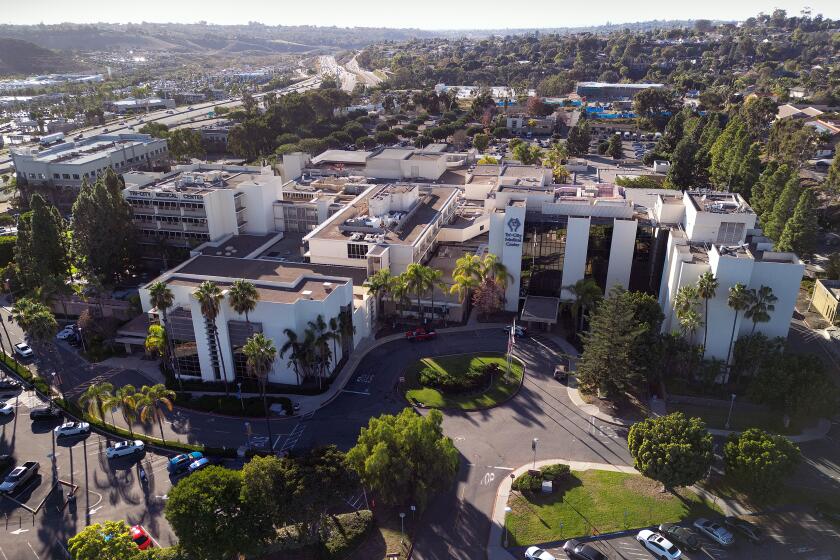
The biggest job losses would be from the realignment of the Naval Medical Center San Diego, which would lose 1,630 people, mostly students. Medical training functions would move to Fort Sam Houston in Texas under Rumsfeld's plan.

"It's fair to say that even though there are closures and realignments included in the recommendations today that affect California, overall we fared much better than we have in the past rounds," Panetta said.

For Monterey, the military presence offers more than an economic impact, said Mayor Dan Albert.

"It's the history, it's the social and cultural value we appreciate from the military," he said. "It's part of us. I'm going to feel really happy when I hear taps at 10 o'clock. It's part of the sounds of Monterey."

Rumsfeld's recommendations will be reviewed by an independent nine-member commission certain to face intense pressure from communities trying to get off the list. The commission can make changes before sending its list to Congress and President Bush.

Still, there was cautious optimism from Beale Air Force Base in Northern California to San Diego's extensive Navy facilities. Officials warned that the process is far from over as other states will be lobbying hard to get their installations off the list.

"Those communities are going to come after California, much as we did when we were on the list," Panetta said.

In previous rounds, about 30 percent of the military bases shuttered around the nation were located in California. At the time, the state was dealing with a major recession, the collapse of the aerospace industry in Southern California and civil unrest in Los Angeles.

Major installations like the Army's 27,827-acre Fort Ord in Monterey County were closed, as was the 4,700-acre El Toro Marine Corps Air Station about 50 miles south of Los Angeles.

State officials blamed those heavy losses in part on the failure of the state to mount a unified effort at the time. This time, Gov. Arnold Schwarzenegger lobbied personally and appointed a state commission to promote California's military value.

"You see a vastly different list, frankly, than we were afraid we were going to see," said Rep. Ellen Tauscher, D-Alamo, whose district is home to Travis Air Force Base, which stayed off the list. "You saw a virtually united congressional delegation, our two senators and the governor working this."

"We decided as a community that we weren't going to be hit again like a tsunami when Fort Ord closed," said Rep. Sam Farr, a Democrat who represents Monterey County.

Panetta, who served as White House chief of staff in the Clinton administration and earlier represented Fort Ord's district in Congress, also credited the state's united lobbying efforts and attempts to work with the military.

In Monterey, community leaders began working on keeping its installations as soon as the last round of closures took place. The Naval Postgraduate School, which provides advanced training to U.S. and foreign military officers in all services, was rumored to be on the chopping block as late as two weeks ago.

Besides renovations and lobbying, the school itself expanded its offerings to include a degree program in homeland security, a first.

The Defense Language Institute also was thought to be a potential loss because it narrowly escaped closure in previous rounds. But the invasion of Iraq showed the importance of language training, Panetta said.

The city's public works department now handles tasks such as road maintenance and repairs at the language school, saving the military an estimated $4 million a year, Albert said.

"These communities understand now that they've got to work and support the military in their area. They've got to try to reduce the cost. They've got to develop partnerships," Panetta said.

Monterey wasn't alone in ratcheting up efforts to preserve its military facilities.

In Southern California, community leaders spent more than a year on a nearly $1 million lobbying effort to save Los Angeles Air Force Base, which designs and procures the military's satellite systems.

They got their good news while on a conference call together early Friday.

"There was an awful lot of excitement and a lot of sighs of relief," said Redondo Beach City Councilman John Parsons, co-chairman of a regional alliance. "But I think everybody recognizes that it's not over yet, and we know there are people who still want the mission of L.A. AFB to move to their community."

But though California's largest bases were spared, smaller installations in a number of communities are on the list. Panetta said efforts are underway to reduce the number of California bases on the list even further -- and ensure no more are added.

In Norco, about 50 miles southeast of Los Angeles, the closure of the Naval Surface Warfare Center would mean 1,100 lost civilian jobs. The base, which opened in 1951, is the city's third-largest employer. Rumsfeld would move the jobs to Point Magu's Naval Base Ventura County in Southern California.

"This is going to hurt, no doubt about it," said Robert Shine, president of the Norco chamber of commerce.

Associated Press Writers Erica Werner, Don Thompson, Michelle Locke, Chris Nguyen and Jeremiah Marquez contributed to this report.

Next Previous

Advertisement

Post your Comments[-]Go to Top

First name only. Comments including last names, contact addresses, e-mail addresses or phone numbers will be deleted. Attempts to misrepresent your identity or impersonate any person will not be approved. All comments are screened before they appear online, so please keep them brief. Comments reflect the views of those commenting and not necessarily those of the North County Times or its staff writers. Click here to view additional comment policies.

Submit Comment[-]

(optional)
   

Advertisement

Videos