Gambling conference attracts crowd at Pechanga
By: EDWARD SIFUENTES - Staff Writer | ∞
Pechanga Chairman Mark Macarro opens his speech at the Western Indian Gaming Conference held Wednesday at the Pechanga Resort & Casino.
DAVID CARLSON Staff Photographer
Order a copy of this photo
Visit our Photo Gallery
PECHANGA INDIAN RESERVATION ---- A handful of gambling agreements that could generate as much as $20 billion for the state, including $500 million this year, should be renegotiated, a top legislative Democrat said Wednesday at a tribal gambling conference.
The agreements would allow tribes, including the Pechanga Band of Mission Indians in Southwest Riverside County and the Agua Caliente Band of Cahuilla Indians in Palm Springs, to add more slot machines to their gambling floors in exchange for large contributions to the state's coffers.
Gov. Arnold Schwarzenegger, who included the estimated $500 million in casino revenues in his budget proposal last week, signed the agreements last year just days before the end of the legislative session. None were ratified by the Legislature because of questions on labor provisions from some Democrats and opposition from some labor unions.
Schwarzenegger said revenue from the agreements would help balance the state budget for the first time in years.
Assemblyman Alberto Torrico, D-Fremont, and chairman of the Assembly Governmental Organization Committee, said at the conference he had a number of questions on the terms of the compacts, including environmental and labor provisions.
"I think he (the governor) has the burden to go back and renegotiate those compacts, and to assure that they're negotiated in a fashion that will be to the satisfaction of the state Assembly," Torrico said.
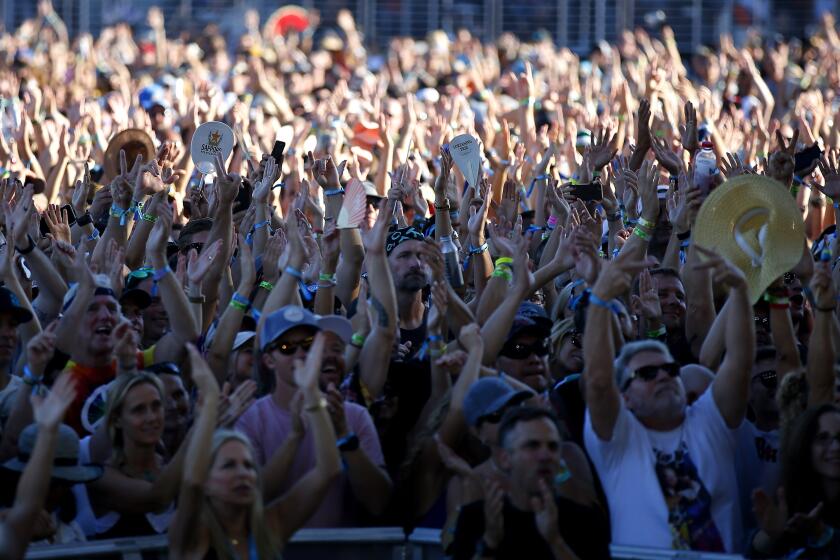
Torrico was a panelist at a workshop held during the annual Western Indian Gambling Conference at the Pechanga Resort and Casino. The conference attracted more than 600 people, including Los Angeles Mayor Antonio Villaraigosa, who spoke during opening ceremonies.
Speaking to reporters in Sacramento on Wednesday, Schwarzenegger said there was no need to renegotiate the gambling agreements and cautioned lawmakers that the state's financial picture would worsen without the compacts.
"If they don't (ratify the compacts), it means that they are falling short a lot of money," the governor said. "And that money is going to some very important programs. We're talking about $500 million. We're talking about $20 billion over the course of the compacts. So, we're losing a lot of money if they don't."
State Sen. Dean Flores, D-Shafter, who attended the gambling conference, said he was in favor of the compacts ---- if they deliver the money that the governor said they would.
Pechanga Chairman Mark Macarro said his tribe's compact provides protections for workers, including the right to unionize, and benefits the state.
"We hope that the Legislature will carefully consider the merits of the compact and the benefits it will provide workers, local communities and California," he said.
Last year, the Assembly defeated an agreement that would have allowed the Agua Caliente Band to add 3,000 slot machines and open a third casino. It would have paid the state up to $1.8 billion during the life of the deal but was opposed by labor groups because it removed a method to recognize when workers want to start a union.
Labor groups cheered the defeat of the Agua Caliente compact, saying it should send a clear message to tribes they must better protect workers and the environment.
Lobbyists for the state's horse racing industry also opposed the compacts because some of them include clauses that could complicate the efforts of track owners to expand gambling at their casinos.
Schwarzenegger announced five deals last year. They would allow nearly 20,000 new slot machines on Indian reservations, mostly in Southern California, if the Legislature approved them.
Two agreements would allow the Sycuan Band of the Kumeyaay Nation to install up to 3,000 new slot machines at its El Cajon casino and resort, and the Yurok Tribe to install the first 99 slot machines on its reservation in Humboldt and Del Norte counties.
The governor also struck deals allowing three other tribes ---- the Pechanga band, the Morongo Band of Mission Indians and the San Manuel Band of Mission Indians ---- to increase the number of slot machines at their casinos by 5,500 each.
The agreements would for the first time require many of the tribes to contribute to the state's general fund, much the way corporations pay taxes.
At the conference, Anthony Miranda, chairman of the California Nations Indian Gaming Association, which sponsored the event, gave an annual "state of the tribal nations" address. He said Indian casinos employ more than 56,000 workers in the state.
Miranda also detailed a five-point plan to improve Indian governments and their businesses. He said tribes need to help spur economic development in all Indian communities, address problem gambling, assure that nongambling tribes get a share of the casino revenues, work with nontribal groups on common causes, and diversify tribal businesses.
"Our home state of California expects to grow 30 percent over the next 20 years," Miranda said. "Will our tribes be positioned to seize the opportunities that such tremendous growth provides?"
The conference, which includes a trade show and various workshops, continues today.
-- Contact staff writer Edward Sifuentes at (760) 740-3511 or esifuentes@nctimes.com.
More Stories
Advertisement
Legalize Gambling wrote on Jan 18, 2007 8:52 AM:Legalize gambling for all. Use taxes to pay debt etc. Why should the Native Americans be the only ones to profit. Casinos on the coast would be a fantastic draw and decrease taxes. Bye Bye Vegas!
Shut them down! wrote on Jan 18, 2007 9:54 AM:We live in SD not Vegas. They bring crime, traffic and other problems. They do not pay their fair share like Vegas!
anotherview wrote on Jan 18, 2007 9:59 AM:One sovereign cannot dictate to another. Labor unions and their supporters ignore this fundamental principle. Thus, the state cannot side with the labor unions to impose their special interest (union-building) on the tribal government-owned casinos. Moreover, the present tribal-state gaming compacts already enable the labor unions to organize tribal casino employees, by secret ballot. But the labor unions seek new language for easier organizing, by a check-card personally handed to an employee (with pressure to join). This check-card method would deny the tribal government a say-so in this union activity, and also deny free speech to the constituents of tribal governments via their elected tribal officials. Note, dear reader, that in fact under the tribal-state compacts ratified during the Davis administration, three tribal casinos have unionized their employees. The language allowing this union organizing remains intact and untouched by the gambling agreement amendments signed by the governor last year. The labor union bosses, however, do not like this playing field, and wish to tilt it more in their favor.
anotherview wrote on Jan 18, 2007 10:00 AM:One sovereign cannot dictate to another. Labor unions and their supporters ignore this fundamental principle. Thus, the state cannot side with the labor unions to impose their special interest (union-building) on the tribal government-owned casinos. Moreover, the present tribal-state gaming compacts already enable the labor unions to organize tribal casino employees, by secret ballot. But the labor unions seek new language for easier organizing, by a check-card personally handed to an employee (with pressure to join). This check-card method would deny the tribal government a say-so in this union activity, and also deny free speech to the constituents of tribal governments via their elected tribal officials. Note, dear reader, that in fact under the tribal-state compacts ratified during the Davis administration, three tribal casinos have unionized their employees. The language allowing this union organizing remains intact and untouched by the gambling agreement amendments signed by the governor last year. The labor union bosses, however, do not like this playing field, and wish to tilt it more in their favor.
Balderdash! wrote on Jan 18, 2007 2:43 PM:However one paints the picture, the money flowing through the casinos reflects the losses of gamblers. I would guess there is a finite amount of disposable income available and to act as if increasing the number of casinos and slots is critical to tribes' survival is a ridiculous joke. This is all about greed! How about legalizing slots for all in California and allow more than one group to dicate where and how the billions of dollars of profits go. The state dosesn't need to be held hostage. This whole matter has backfired on the citizens of California.
Joe wrote on Jan 18, 2007 4:14 PM:Held hostage? How are the tribes holding the state hostage? Tribal gaming contributes millions of dollars to local communities via charitable donations (schools, police, fire, roads, etc...) and business through goods/ services used. Money is also set aside for non-gaming tribes which is monitored and distributed by state officials. How about the thousands of non-indian employees for these "hostage takers"? Nobody is forcing people to visit the casinos.
- TEMECULA: Protesters line intersection (1735)
- ESCONDIDO: City's dreams of an 'upscale' downtown may be dying (1485)
- ESCONDIDO: 3 DUI arrests, 46 impounds at checkpoint (1119)
- TEMECULA: Parade, fireworks draw thousands on nation's birthday (815)
- REGION: Study says two-thirds of state beaches eroding (777)
Advertisement
Videos
Advertisement