Play it forward: Encouraging organ donors to give, get
By: E'LOUISE ONDASH - For the North County Times | ∞
When Dianna Ellis of Poway heard about Lifesharers' "organ circle," she thought it made a lot of sense. Lifesharers is a national organ donor registry in which those who are enrolled are promised priority, should they ever need an organ transplant. The donated organ would come from another Lifesharer member.
"Any system that increases organ donors makes a lot of sense to me," said Ellis, who signed up six months ago. "I'm a registered nurse and I know that sometimes it's very difficult to get the organs they need to save lives. And when I go, I don't care what organs they take; I'm obviously not going to need them."
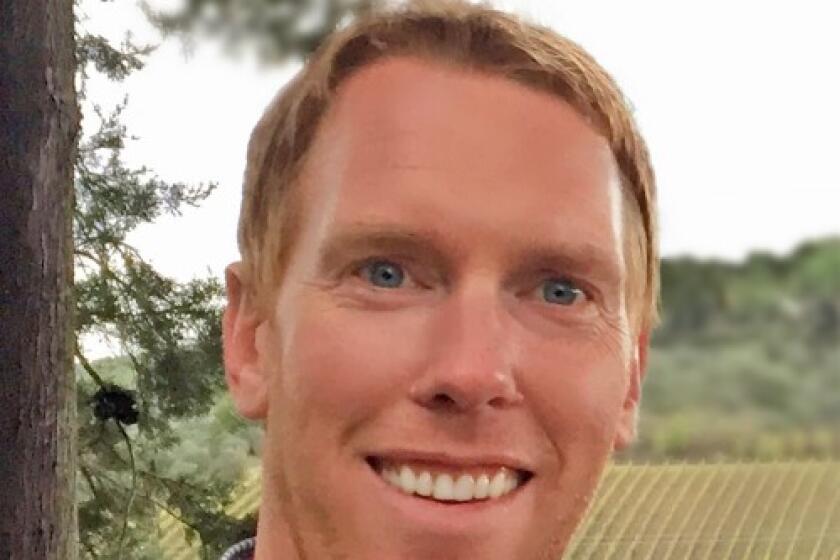
Nonprofit Lifesharers was founded about five years ago by David J. Undis, 52, a retired insurance executive in Nashville.
"I kept seeing all these articles about people dying waiting for transplants and how low the donation rate is," he said in a phone interview. "It occurred to me that if you had to be a donor to get a transplant, a lot more people would register to be donors and it would save a lot of lives."
Undis also was concerned about what he calls "the tremendous waste" that occurs because so many people don't sign up as donors.
"As a nation, we bury or cremate 20,000 transplantable organs a year," he explained. (According to the United Network of Organ Sharing, of all those who die each year from all causes, about 7,500 people could be organ donors but are not. On average, each donor can provide three organs.)
There are 95,000 people in this country on the waiting list for organs at any one time. Ý
"About 8,000 of these die every year while their neighbors throw away organs that could save their lives," Undis said.
Lifesharer has about 8,100 members ---- double what it was six months ago; 49 are on the organ transplant waiting list.Ý
Undis argues that joining Lifesharers increases the chances of getting a transplant should a donor ever need one, and makes the transplant system more fair.
"The whole purpose of Lifesharers is to increase the number of organ donors, and that's going to save lives. People who aren't willing to donate their own organs should go to the back of the waiting list."
Not to be confused with Lifesharers is Lifesharing, a division of UC San Diego Medical Center and one of 58 regional nonprofit, federally designated organizations that provides organ recovery, donor family support and educational services.
Lisa Stocks of Encinitas is the executive director of the San Diego/Imperial counties region and disagrees with Undis "on almost every point."
"The federal government has put together equitable organizations that give organs to the sickest people and the closest geographically," she said, "and the rules and guidelines are reviewed constantly."
Who gets an organ depends on many factors, including how long an organ can be outside a body. A liver can survive for 12 to 18 hours, while a heart survives for only four hours. Kidneys hold for 48 hours, but the donor must match the recipient's antigens, and it may be given to the nearest person or one who has been on the list the longest.
Other factors that influence organ assignment include the state of the donor's health, blood type and their size. For instance, a child's heart will not support an adult.
"Every organ has a different set of recipient rules," Stocks said.
It is legal in all states to designate a recipient if the donor or the family wishes.
"The way to increase donors is to educate the public ---- (to teach possible donors) to let their families know that if they get in the position of being a donor, that's what they want. That will do more for the system than Lifesharers."
Barbara Engleson, 51, of Carlsbad signed on with Lifesharers five years ago, but she's always had that pink dot (indicating her willingness to donate organs) on her driver's license.
"I've been an organ donor since I was old enough to drive," she said. "I think Lifesharers is a great program and I'm surprised more don't volunteer to donate organs. They aren't going to do us any good after we go to the great beyond."
Engleson compares Lifesharers to the policy of many blood banks.
"I've always been a blood donor, and if you're a 'super donor,' you have unlimited blood for you or your family," she explained.
If the United Network of Organ Sharing announced tomorrow that it puts registered donors at the top of the waiting list, everyone would register, argues Undis.
"For the life of me, I can't think of a reason why this isn't worth the thousands of lives it could save."
Learn more: The United Network of Organ Sharing Web site is at www.unos.org. Lifesharers' Web site is at www.lifesharers.org. E'Louise Ondash of Vista is a registered nurse. Contact her at elo3@cox.net.
First name only. Comments including last names, contact addresses, e-mail addresses or phone numbers will be deleted. Attempts to misrepresent your identity or impersonate any person will not be approved. All comments are screened before they appear online, so please keep them brief. Comments reflect the views of those commenting and not necessarily those of the North County Times or its staff writers. Click here to view additional comment policies.
Today's Stories
Advertisement