Poway's new solar-powered apartments celebrated
By: QUINN EASTMAN - Staff Writer | Tuesday, June 5, 2007 11:39 PM PDT ∞

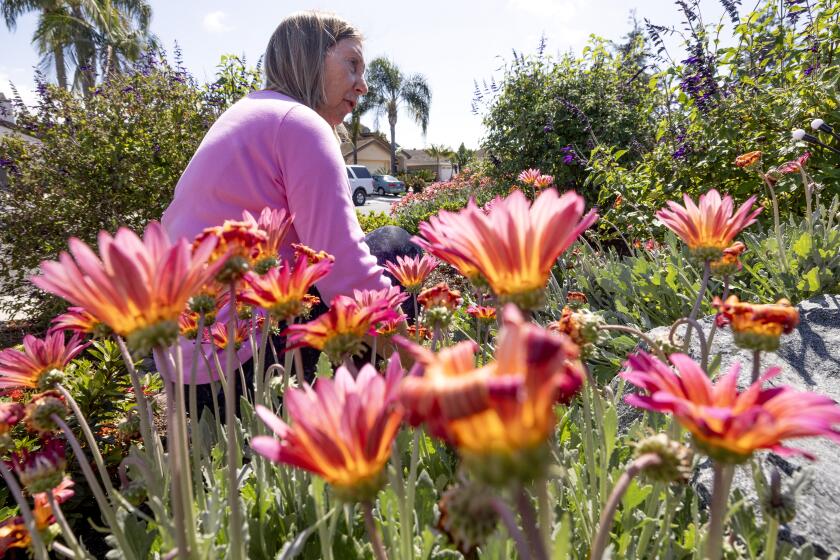
Becki Clause, 33, and her two-year-old daughter, Annabelle, have a view of the solar paneled car park from their apartment. The resident of Poway's newest affordable-housing complex, Solara, likes the contribution being made to the environment.
JOHN KOSTER For The North County Times
Order a copy of this photo
Visit our Photo Gallery
POWAY -- Residents at Solara, Poway's newest affordable housing complex, joined a host of city, state and building officials in celebrating its energy efficiency Tuesday at the facility's Opening Celebration.
Solara's rooftop solar panels and energy-conscious construction allow the project's manager, Escondido-based Community Housing Works, to eliminate residents' electricity bills.
The California Energy Commission is recognizing it as the first of several "Zero Energy New Home" projects whose energy needs throughout the year can be fully met by the sun.
Community Housing Works started buying land for the 56-unit, two-story complex on Community Road in 2001 and assembled the 2.5-acre site with the help of the city's Redevelopment Agency. People began moving into Solara in mid-April.
"I'd live here if it wasn't affordable housing," said Ethel Peckham, a retired psychiatrist, as she welcomed visitors into her sunny ground-floor apartment. "That's the strongest endorsement I can think of."
Peckham added that a "real selling feature" for her were the apartment's wood finishings and carpets, which are designed not to emit chemicals that can set off allergies.
Solara's design also includes windows that promote cross-ventilation in each apartment, balconies and other overhangs that are designed to shade key areas, energy-efficient water heaters that have no tanks, and special toilets that let residents choose how much water they will flush.
People who make 30 percent to 60 percent of the region's median income are eligible to live at Solara. For a family of four, that works out to an annual income of $41,100 or less; a single person making $28,750 or less also qualifies.
Residents pay between $388 and $1,075 per month, depending on their incomes and whether they are renting a one-, two- or three-bedroom apartment. Utilities are included in the rents. Two apartments are reserved for developmentally disabled residents.
The development's design and its utility benefits for residents are exceptional for affordable housing projects nationwide, according to Ken Wade, executive director of NeighborWorks America, a coalition of affordable housing agencies across the country.
"In other places, you see managers providing solar plus hot water, or it'll work for projects that have a fraction of affordable units," Wade said. "This is definitely ahead of the curve."
California's electricity rates give more incentives for owners of large, expensive homes to install solar panel systems than they do for owners of modest homes or renters.
Sue Reynolds, executive director of Community Housing Works, gave credit to Poway city officials for helping the $16 million project move forward "again and again."
She added that other North County cities are utilizing a lot of the same technology in upcoming projects.
Mayor Mickey Cafagna said the project represented the city's commitment to redevelop the southern part of Poway in a way that is pedestrian-friendly and balances jobs with housing.
"We are proud to have the greenest affordable housing development in the state," Cafagna said.
Resident Eddie Lopez said he and his son found Solara a convenient location because it is close to Hilleary Park and a city library and across Community Road from a shopping center.
Solara's 140-kilowatt, $1.1 million solar panel system was installed as part of utility San Diego Gas & Electric Co's Sustainable Communities program, which is supposed to encourage energy-efficient building practices.
The utility estimates that for part of the year, Solara's panels will be generating more electricity than residents use and will feed the region's electricity grid.
"Right now, the meters are going in the opposite direction -- and I'm proud of that," said SDG&E's vice president of regulation, Lee Schavrien.
SDG&E says it recently applied with state utilities regulators for rule changes that would make it easier for affordable housing complexes to have one large solar panel system.
-- Contact staff writer Quinn Eastman at (760) 740-5412 or qeastman@nctimes.com.