Residents forming fire safe council in Valley Center

By: DARRYN BENNETT - Staff Writer | Sunday, January 20, 2008 10:21 PM PST

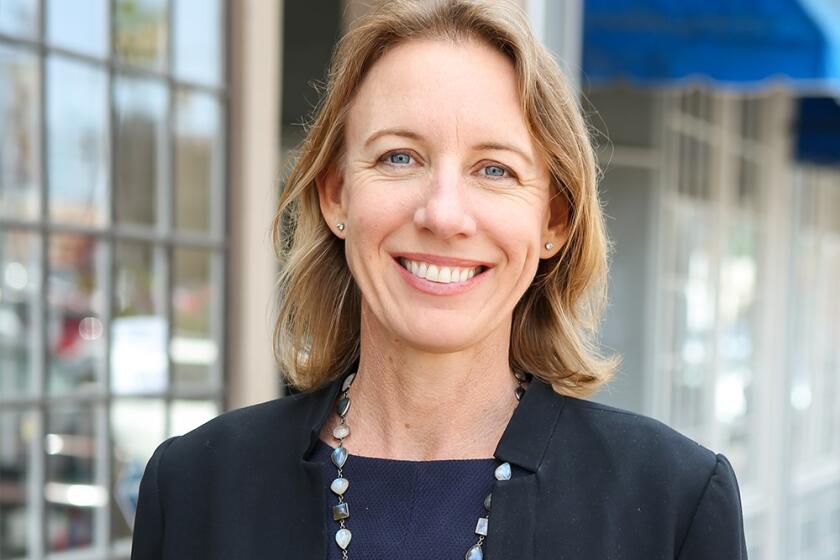
Valley Center residents Jim Courter, left and Ron Perry are working to create a fire safe council that will focus on fire prevention, clearing and chipping efforts and education.
WALDO NILO Staff Photographer
Order a copy of this photo
Visit our Photo Gallery


VALLEY CENTER ---- A group of residents in this unincorporated enclave, peppered with groves of chaparral and low-lying shrubbery, are working to join the ranks of nearly 70 local fire safe councils dedicated to preventing fire-related disasters throughout the county.

Fires have made many communities acutely aware that firefighters are overextended during regional emergencies, and that there are preventive measures that protect residents and their property, said Christine Meyers, a coordinator for the non-profit Fire Safe Council of San Diego County.

An organizational meeting has been set for Wednesday, said Jim Courter, the 20-year Valley Center resident who is heading up the effort to bring a community-led fire management program to the rural neighborhood.

"Fire doesn't scare me anymore. It's just part of what happens," Courter said this week, regarding two county firestorms in four years. "We can be ready by getting rid of some of the many fire hazards in Valley Center."

The emerging Greater Valley Center Fire Safe Council will be one of nearly 30 in North County, including Fallbrook, Deer Springs, Palomar Mountain and Vista, among others, Meyers said.

A council's job
Among the councils' duties are organizing brush-clearing programs, creating emergency evacuation plans and advocating for construction of ignition-resistant buildings, Courter said.

Meyers said fire councils are most successful when they are tailored to community needs and character.

"It's really up to the individual council what programs they run. There's a lot of local control and each council is unique," she said.

More than half of the county groups were created after the Cedar and Paradise fires killed 17 people and burned more than 2,400 homes in 2003. At least four new councils have begun since the October 2007 firestorms, Meyers said.

Also, of the approximately 160 volunteer councils that are members of the California Fire Safe Council, about a third are in San Diego County, Meyers said.

Courter said he anticipates that most of the Valley Center council's beginning work would be to educate homeowners about techniques that could lessen a fire's devastation.

He said he is looking to the Fallbrook Fire Safe Council ---- which formed after the Gavilan fire burned 5,763 acres and destroyed 43 homes in 2002 ---- as a model for Valley Center.

"We're going to use those guys as a resource. They're almost the evangelicals of fire safe councils. You call on them and they're there. It's great," he said.

Dorothy Roth, who leads the Fallbrook group, said she was looking forward to working with Courter's group.

"It's so important to have as many active councils as possible," she said.

After the Valley Center council is formed, Courter said he hoped that up to 12 smaller groups would be created in subareas of the "spread-out" community.

Financing the council
The Greater Valley Center council would have to incorporate as a non-profit to be eligible for government grants, which are expected to be substantial, given the 2007 wildfires, Meyers said.

In the meantime, Meyers, who met with Courter in December, said the fledgling council should solicit "seed money" from private donors.

Courter wasted no time doing just that.

Courter said this week that he and a handful of volunteers had already raised $5,000 to pay for a four-hour course covering fire prevention for areas such as Valley Center, where homes are built on land that is relatively rural and full of combustible plants and trees.

And right now, there is plenty of work that requires more sweat than dollars, Courter said.

"We need donations of labor. My idea is to clear brush and do some chipping to create buffer zones in an intelligent, reasonable, sensible manner," he said.

Success stories
Several community-led fire prevention efforts proved successful when wildfires marched through large swaths of the county in October, fire officials said.

George Lucia, chief of the Palomar Mountain Volunteer Fire Department, said a group of residents who worked year-round clearing brush in the mountaintop communities made "all the difference" for firefighters battling the Poomacha blaze.

Firefighters saved 309 homes, a conference center, a sixth-grade camp and a world-famous telescope during that fire.

The effort gave firefighters safe places to make stands, and the new clearings seemed to take steam out of the fire, said Lucia, who is also the Valley Center fire marshal.

"People need to know the tools to reduce the fuels and be ready to take care of themselves for awhile because (firefighters) can't always be there in a regional disaster," he said. "We saw save ratios that high (on Palomar) because people had actually done preventive things."

Innovative fire management strategies were also instrumental in saving nearly 200 homes in the Paradise Mountain area just west of sprawling Rancho Guejito, a 21,400-acre property that stretches from the San Pasqual Valley north to Pine Mountain near the La Jolla Indian Reservation, Valley Center fire authorities said last week.

For his part, Courter said he was open to considering unconventional approaches ---- such as using herds of brush-eating cattle, a strategy at Rancho Guejito ----- if it kept bulldozers and devastating fires at bay.

"No bulldozing, no chainsaws. A wholesale massacre of the natural vegetation and chaparral is not necessary. I love chaparral," he said.

The meeting is scheduled for Wednesday at 7:30 p.m., at 28751 Cole Grade Road. For information, contact Courter at (760) 715-7523 or at vcfsc@earthlink.net.

Contact staff writer Darryn Bennett at (760) 740-5420 or dmbennett@nctimes.com.

Advertisement

7 comment(s)[-]Go to Top

Darryn, more info please wrote on Jan 21, 2008 3:05 AM:""People need to know the tools to reduce the fuels and be ready to take care of themselves for awhile because (firefighters) can't always be there in a regional disaster," he said. "We saw save ratios that high (on Palomar) because people had actually done preventive things."" said [Lucia, who is also the Valley Center fire marshal.]

Question: What exactly did they do?

"Innovative fire management strategies were also instrumental in saving nearly 200 homes in the Paradise Mountain area just west of sprawling Rancho Guejito, a 21,400-acre property that stretches from the San Pasqual Valley north to Pine Mountain near the La Jolla Indian Reservation, Valley Center fire authorities said last week."

What exactly did they do? What were the innovative fire management strategies?

"For his part, Courter said he was open to considering unconventional approaches ---- such as using herds of brush-eating cattle, a strategy at Rancho Guejito ----- if it kept bulldozers and devastating fires at bay."
Cattle, goats, etc. sound fine; have been proven. However, would hope that bulldozers would be used if necessary to take out overgrown high bushes, etc.

""No bulldozing, no chainsaws. A wholesale massacre of the natural vegetation and chaparral is not necessary. I love chaparral," he said."" Courter and all VC residents must be flexible; natural vegetation, chaparral, etc. is wonderful but reducing fuel and creating fuel breaks is extremely important. Giving up some of the green (plants, bushes, trees, etc.), natural or otherwise, is part of having defensible space and the fuel reduction effort.

Oh Oh wrote on Jan 21, 2008 1:07 PM:I see more tax money and more Big Brother watching. How did the latest Fallbrook fire get so far out of hand if their Fire Council has been in place since 2002. Doesn't sound or look like much fire prevention got done. Sounds like another government agency getting grant or tax money to pay a few members looking for extra retirement income.

to Oh Oh wrote on Jan 21, 2008 2:36 PM:Fire Safe Councils are not a government agency; they are non-profit; and they help protect people, animals, and both old and new homes. All members are volunteers; no money; no retirement income. They help educate residents; they set up time for animals to get tagged (micro-chip); and more. Seems like you are a lazy blogger without any facts. What good have you done for your community.

To To Oh Oh wrote on Jan 21, 2008 3:53 PM:Maybe you better read the article. Sounds as though you don't know the facts. Quote under Financing The Council. "The Greater Valley Center council would have to incorporate as a non-profit to be eligible for government grants, which are expected to be substantial, given the 2007 wildfires, Meyers said". In case you don't get it, government grants are government dollars thus are taxpayer given. Read before you drink the Kool-Aide

jay wrote on Jan 21, 2008 5:38 PM:I believe Fire Safe gets money from various government agencies. Council members are volunteers, but I believe their staff is paid. Am I wrong? Darryn, stop with the "innovative stategies" foolishness. Since when is using livestock, bulldozers, bush hogs etc. innovative? It's called turning chaparral into grasslands and it's been done for centuries. NCT used to have balanced articles about these issues. Now you're just parroting a bunch of baloney from paid hacks at Guejito Ranch. Proof of you contentions, please. Where's Dave Downey?

Straightening the Record wrote on Jan 21, 2008 7:53 PM:The local Fire Safe Councils are entirely volunteer operations depending on donations from local residents and businesses and an occasional (read: rare) grant from a state or federal agency to fund their programs, not salaries. Before spouting your uninformed assumptions, you might try doing a little research. ...

jay wrote on Jan 21, 2008 10:47 PM:You're saying that the full-time staff of the county organizations are strictly volunteer. I don't think so. You are correct that the councils themselves are volunteers.

First name only. Comments including last names, contact addresses, email addresses or phone numbers will be deleted. All comments are screened before they appear online, so please keep them brief. Comments reflect the views of those commenting and not necessarily those of the North County Times or its staff writers. Click here to view additional comment policies.

Submit Comment[-]

(optional)
   

Advertisement

Videos