Private firefighting company set to launch

By: DAN SIMMONS - Staff Writer
Would cost $1,800 a year | Saturday, February 9, 2008 10:04 PM PST

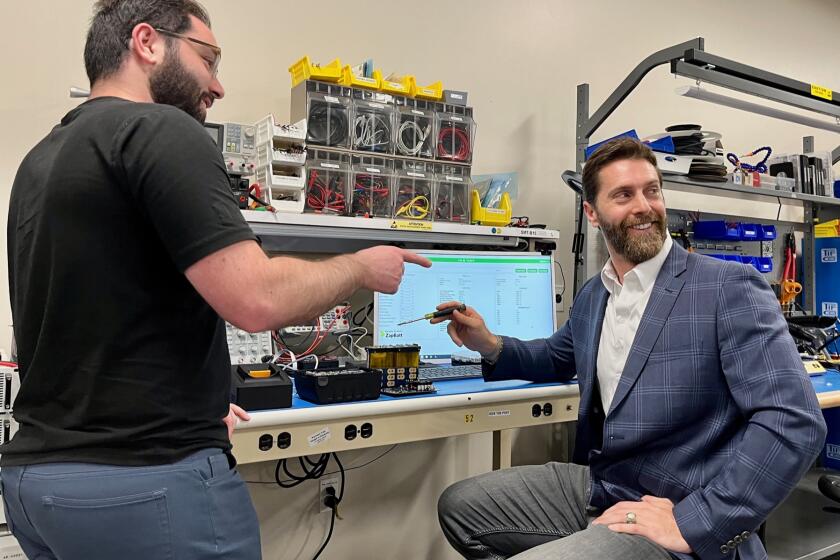
Bill Kneebusch, 36, with Pacific Fire Guard, shows off his GELTEC system hardware. This device provides the delivery system for a fire-retardant gel that can be sprayed on homes in the path of a wildfire.
DAVID CARLSON Staff Photographer
Order a copy of this photo
Visit our Photo Gallery


Municipal firefighters could be joined by fall's wildfire season by at least a private company that has started operations in San Diego County, according to fire officials.

The company, Pacific Fire Guard, is believed to be the first of its kind in the county, said Chief Bill Metcalf of the North County Fire Protection District.

Its founder, Bill Kneebusch, a Cleveland-based entrepreneur, said they will deploy what he called "the Navy SEALs of firefighters" to save homes in the path of wildfires from Oakland to the Mexican border. The service would cost individual homeowners about $1,800 a year, he said, and be ready for duty by May.

Firefighters would deploy to private residences and fend off blazes with a gel-water mixture proven effective ---- if expensive ---- in last fall's fires.

Metcalf said he's also heard of a second private firefighting startup company setting up business. But while new here, the companies are not unprecedented elsewhere.

"It's been shown that using private resources to augment local services is a very common model (nationally) that works very successfully," Metcalf said.

Fire officials expressed mostly support for the new venture, with some reservations.

Capt. Matt Streck of the California Department of Forestry and Fire Protection said he welcomes the additional resources the company would provide, but warned homeowners against a false sense of security.

"There's no substitute for defensible space around your house," he said. "My concern would be that people would think this would be a great panacea and not prepare adequately."

Kneebusch, trained as an engineer, was consulted by at least two California fire chiefs in the creation of his business.

"I can only look at his concept and say, why not?" said George Lucia Sr., chief of the Palomar Mountain Volunteer Fire Department. While Lucia endorsed the company and consulted Kneebusch, he said he has not been directly compensated.

Kneebusch acknowledged some daunting challenges facing the startup company. First, he has no experience as a firefighter. Second, he currently has no staff. Third, his company is brand-new, with no record of success or failure.

Add to those another concern about the highly personalized service model in a manpower- and equipment-heavy field: "I don't know how you make that work from a financial perspective," Metcalf said.

But Kneebusch said he's confident the company will succeed and provide a valuable service to customers. He became fascinated by the wildfire problem through visiting his brother in California, he said, and has devised many different ideas to combat them before arriving at the current business model.

In it, firefighters will spray a mixture of fire-resistant gel and water onto homes through a pressurized hose just before a wildfire roars through and remain on the properties until the threat passes.

He said he has sunk a "very, very significant" amount of his money into developing it and applying for numerous patents.

"As our name gets established and the job we do gets proven, I think we'll be a very valued resource," he said.

Lucia said he endorsed the company because the fire-resistant gel proved to be "a star product" in fighting the 50,000-acre Poomacha fire in October. It must be mixed with water and can be sprayed onto the perimeter of structures, vehicles and vegetation to ward off flames and heat.

Last August, Lucia's department made the gel available to residents at cost thanks to a grant. Lucia said "numerous" homes were saved thanks to residents squirting the mixture on the perimeter of their homes shortly before the flames arrived.

Having private crews working on selected homes would ease the strain on his department, Lucia said.

"We're always stretched thin," he said.

But the gel has its limits for homeowners applying it themselves, said Robert Carlyle, a lifelong Palomar Mountain resident and president of the Palomar Mountain Fire Safe Council.

First, it must be applied with a hose; if utilities are shut off due to the fires, the gel can't be used. Second, its prime effectiveness comes in the first hour of use. Over time, it loses moisture and can dry out before the fire threat has passed.

Kneebusch, in consultation with Lucia and another fire chief he declined to name, said he designed his service to address those limitations.

His firefighters would have access to about 2,000 gallons of water on each company truck and thus not rely on another water source. And his firefighters would stay at each house until the fire threat has passed, he said.

"Essentially, we'll become an extension of you, almost like your own private fire department," he said.

Kneebusch said he plans to hire trained firefighters looking for a second income from San Diego to Oakland and offer them a "doctor's salary." They'd be required to go through wildfire training once a year.

"We're not going to have guys who were cutting grass yesterday," he said.

A dispatcher would deploy two-person firefighting teams to houses signed up for the service, Kneebusch said. They'd spray the perimeter of each house with the gel using a high-pressure hose system that Kneebusch developed himself using knowledge gleaned by running his family's Cleveland-based hydraulic hose and pumping business, High Production.

The company's first two trucks are being manufactured in Cleveland now, Kneebusch said, and they're expected to roll into California within two months. The Cleveland plant can build two of the trucks a month, he said, and expects to have 40 in place throughout Southern California by September. The company's headquarters will be in Camarillo, Kneebusch said.

Kneebusch said he'd also be willing to contract with homeowners associations, insurance companies and even cellular phone companies to protect their towers during wildfires.

Metcalf said he won't be surprised if more private firefighting companies start up in the near future.

"Anytime there's a real or perceived need in the marketplace, businesses will step in to fill it," he said.

Contact staff writer Dan Simmons at (760) 740-5426 or dsimmons@nctimes.com.

Previous
Bookmark and Share

Advertisement

Pre-Registration Comments[-]Go to Top

US Forest Service Tony wrote on Feb 9, 2008 10:57 PM:It's great to see a new business break into the market by immediately offending EVERYBODY else in the industry. "The Navy SEAL's of firefighters"? So having never fought a fire and having no staff, this guy has the audacity to make that comparison!

He should have talked to more than a volunteer fire chief, ( who is prominently displayed on the company website, using his authority as the Palomar Fire Chief)for advice on this type of work. Structure protection is an inherently time consuming process, which is also very labor intensive. Even with all 40 trucks immediately on-scene (which is highly unlikely) he can only protect 40 homes an hour at best.

So what happens to the other subscribers during those first hours? Do they get a refund when their house does not get gelled?

He really needs to rethink the $1800 rate. He will need to charge alot more to get a truly qualified off-duty firefighter to come in and do that kind of work. P.S. Your Workers Comp costs alone will tear into any profits.

The end result will be under-paid and un-qualified young boys running around and interfering with all the other trained emergency service workers like Animal Control, the Sheriff, Utility workers, CHP and oh yeah the real firemen.

fire insurance choice wrote on Feb 10, 2008 1:18 AM:Wildfire Facts: not enough firefighters, firetrucks, air coverage. It is important to have a choice. RSF and several other areas in SD County can subscribe to the AIG Wildfire Protection Unit. AIG homeowners spend a lot (more than 15k a year according to AIG website) on insurance (paintings, boats, etc.). AIG saved homes in RSF in 2007. Pacific Fire Guard sounds like it may be affordable to middle income homeowners. There are several gels on the market and probably more will be available. Choose carefully for a gel or a private firefighting company. And make sure you have defensible space year round, boxed eaves, etc.etc. Excellent free accurate info for fire protection is available from the wildfire zone web, especially the 'cardboard-like' series. The web was established with special funding from the Board of Supervisors of the County of San Diego.

tax payer wrote on Feb 10, 2008 7:37 AM:Excellent. I wish they would have more private fire fighting and paramedic services. It would improve service and lower the cost to the tax payers. I am sick of paying 6 fire fighters to sleep, eat and watch movies when they are not on a call making $80k to $250k per year.

Great idea! wrote on Feb 10, 2008 8:03 AM:Time the state and local firefighters had some competition. Hopefully a better service and reduced costs for fighting fires is a result of privatization. We just need a dozen more companies like this to increase competition and maybe we can get rid of all the high priced firefighters and their unions that bilk the public taxpayers and do a minimal job.

What happens wrote on Feb 10, 2008 8:07 AM:if you hire these people and they are unable to prevent your house from burning down? If he is hiring firefighters from san diego looking for secondary income what happens when fire officials are calling in all reserves and out of area firefighters during a fire crisis?

JF wrote on Feb 10, 2008 8:12 AM:Actually, AIG *claimed* to save homes in RSF. San Diego City firefighters have before and after pictures of themselves saving the very same home that AIG had their news conference at. Hmmmm...

Here's my real question, why are people unwilling to pay an additional $1800/yr on taxes for a fire department that will protect everyone, but are willing to spend that to protect just themselves? Are they "special"?

What if rather than a few select individuals paying $1800/yr for personal protection, everyone paid $200/yr? Imagine the additional protection we could have, year round, day in - day out. Why are we unwilling to pay millions to save billions?

JF wrote on Feb 10, 2008 8:20 AM:Now... don't get me wrong. There is a place for private fire protection -- working within an established incident command system. The US Forest Service contracts with many private engines in NorCal and across the west. Closer to home, both the USFS and CAL FIRE use contract water tenders. Some are excellent adjuncts to existing forces -- they provide an overflow capability. Others, however, are literally Beverly Hillbilly ancient engines with untrained, unfit ma and pa "firefighters" who present more of a liability than a benefit.

And they still cost more per day than a well trained USFS engine. We have to provide strict limitations on training and experience for these folks.

worth trying wrote on Feb 10, 2008 9:57 AM:we should all welcome alternative solutions to the obvious failure in our fire protection. Fire Authorities control access to the areas in need of protection. They will make sure this guy fails."Public Safety Card"

Escondeeter wrote on Feb 10, 2008 10:50 AM:Tony's right, it's a service that makes no financial sense. Structure protection is, as he points out, time consuming. They'll run out of units long before they run out of structures.

As far as hiring off-duty fire personnel goes, all departments in any area where there's a significant event will recall their off-duty personnel to staff reserve apparatus. "Doctors salary", or no, he's going to have a tough time finding people who are willing to risk a lifetime job for a few days highly paid work.

It's always useful to have additional assets on scene, so I'm not sure these guys would necessarily be in the way, but some wildland events are not amenable to suppression activities, gel or no. We had a recent example up by Banning a couple of years back where an entire crew got wiped out trying to save a structure. Most government fire crews are wise enough to leave those kinds of situations in order to survive, I'm not sure a crew that gets paid to stay will be as likely to get out of a life-threatening situation. In that event, somebody else is going to have to go try to save them.

Fuel2dFire wrote on Feb 10, 2008 12:46 PM:The news of a "private" fire fighting organization scares me just like a "privately" run prison scares me. With these so-called private businesses there's always the concern for the "bottom line". What happens when such a company is forced to cut corners and underpay its personnel to satisfy share holders during crucial times? Just another night mare waiting to happen. Let's hire more CDG, USDF, and Municipal Fire Fighters and get a guaranteed product. It's worth the cost!

Privatization wrote on Feb 10, 2008 1:02 PM:For all of the public service employee haters out there, know this: Federal, State and Local fire agencies all hire and use PRIVATE equipment and personnel. From water tenders to aircraft, to handcrews, to support equipment, there are millions spend on private companies every year. The use of private companies on fires is not new nor does it cause me concern. However, Mr Kneebusch's plan's fatal flaw is that he wants to be hired by individuals rather than the jurisdiction's incident management. Fire commanders simply cannot allow these guys to roam around in dangerous environments without accountability. OHSA will hammer the fire commanders civilly and criminally. What's worse is that his business model goes back 200 years when fire brigades were hired by insurance companies, and if you were not a subscriber then you were just screwed.

The service in the article has merit, but only if it is integrated with the rest of the fire management...for their safety and the safety of all the other firefighters.

worth trying wrote on Feb 10, 2008 1:52 PM:that would be like McDonalds controlling Burger Kings every move. The fox has been guarding the hen house for way to long.You guys are not worth it.Cost -vs- benefit The system was exploited for personal gain$$ (collectively) and now the people you SERVE do not want or TRUST you guys.Get your union to blitz a positive PR campaign. Message to union: need more billboards of us saving kids. cost-vs-benefit, you don't have enough

GET REAL!! wrote on Feb 10, 2008 4:49 PM:Just make sure your house has enough brush cleared,,,
Your homeowers insurance is current,,,
You have a large safe with a high fire rating.
Then get the hell out and let the firefighters do the rest!

taxpayer, you represent the worst wrote on Feb 10, 2008 6:47 PM: in our society, and are an example of how selfish we've become. How dare you insult these men and women who protect YOUR home, YOUR community, and that of your relatives, friends (if you have any) and historic landmarks? You should be ashamed. Obviously you'll be one of those on this bandwagon to pay the $1800 a month extra to protect your home with no regard for anyone else. Let me say this in response: If my home burns down because this company interferes in any way with the brave firefighters I pay taxes for because they're protecting your precious castle, I'll be the first in line to sue you, the company, and anybody else who got in the way. Let's just say I'll be fighting fire with fire. Still feel like you're better protected?

esteban wrote on Feb 11, 2008 1:05 PM:Horrible, stupid idea.

Come On wrote on Feb 11, 2008 9:16 PM:I don't know any firefighter that makes 250K a year, and I know a few. I don't hear people complain when ball-players make 20 million over a 5 year contract or the actor that makes 1 million for each t.v. episode. Being a firefighter is more than squirting the foam or gel on the home and leaving. Insurance companies may state they saved homes, but it was the firefighters that stayed and put out the fires on the house that was geled and the palm tree was burning next to the home. Professional firefighters have college degrees, they have hundres of hours of training and experience. The only people that would want to do this job for this company will be young ill trained people, with lots of guts but lacking in knowledge and experience...A Recipe for disaster you just name it.

Ålan wrote on Feb 25, 2008 1:26 PM:As a Chief of a rural, forested community, I would welcome this service for any incident. I don't have enough firefighters or engines to protect all of my jurisdiction. Pacific Fire Guard would be of tremendous value to me, my firefighters, and my community. I wish this company the best.

Dan wrote on Mar 5, 2008 4:57 PM:This would do nothing more than add resources to these major disasters. No jobs would be lost, career firefighters would be better equipped to attack the fires. If everyone would stop being proud and work together there would be major success stories to tell. Wildfires are not going anywhere but new tools and resources are available to defend from them. The point is less homes and lives can be lost with added resources. Career firefighters in this country do a great job and should be commended for their service!

Jon wrote on Mar 25, 2008 5:23 PM:There need to be some sort of middle ground on this issue. First, the unattended home with gel still is at risk. The gel can not cover everything. In addition the effects of the gel deminish with time, heat and wind.

There are numerous systems such as WEED, and CSS Fire that provide a home protection system for wildland fire exposures. These systems are installed months or years before a fire event, automatically controlled and proven effective with no human factors being at risk.

The systems are installed and serviced two to three times a year. The system is available 24 hours a day 7 days a week and 365 days a year. Activation may be triggered by heat sensors, uv light sensors, manually or by cell phone. This is all done without puting any life in danger.

At $1,800 per year for a service a home owner would own a professional and proven system in 7 to 10 years. The system would also qualify for discounts in fire insurance rates. And increase the resale value of your home. With the proposed services all that you would have at the end of 10 years is $18,000.00 of cancelled checks.

Automatic sprinklers are widely accepted for interior applications. Technology has now adapted these systems into dependable systems for exterior fire exposure.

If the millions of dollars that will be spent on staff and equipment for "private fire departments" were redirected to automatic supression systems we would be years ahead of the problem.

The Zaca Fire of 2008 cost $500,000,000.00 (1/2 Billion Dollars) to contain. The exact figures on the southern California fires is still out. A Billion dollars could do a lot of prevention.

katie wrote on Aug 25, 2008 2:03 PM:as a wildland firefighter, i wish this company the very best. especially in san diego, it is COMPLETELY obvious that the public services are NOT sufficient!! not to insult anyone working down there, it's just a fact.

in my experience, the private sector works much more efficiently than public and you know why???? it's that "evil" bottom line!

the $1,800 price makes ease of mind available to a much much greater pool of homeowners than Chubb or AIG's programs--- that's awesome! some of us whose homes aren't worth a million would still glady pay that fee for preventative fire protection.

and something else, in the case of a catastrophic fire (i mean REALLY catastrophic... think terrorism?!?!?!), the whole state and the whole country will have that many more engines and that many more experienced fire fighters. it's cool that someone is willing to take all this risk to build a company that could potentially save..??

good luck and glad to have ya out there!

Registered Comments[-]Go to Top

Advertisement

Videos