TELECOM: Area code split hearing Thursday

By BRADLEY J. FIKES - Staff Writer | Tuesday, September 2, 2008 9:07 PM PDT

Coastal North County and the areas east to Borrego and Julian will get the 442 area code under a proposal by the California Public Utilities Commission. (Illustration courtesy of the California Public Utilities Commission)

CARLSBAD ----North County residents will get a last chance this week to speak up on the proposed 442 area code in North County.

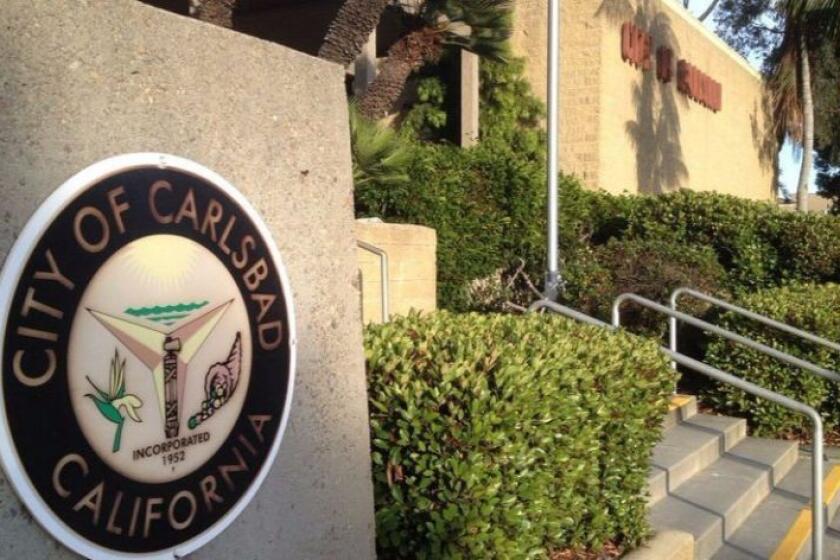
The California Public Utilities Commission is to meet Thursday for a hearing on the controversial change in Carlsbad's City Council chambers from 4 to 7 p.m., 1200 Carlsbad Village Drive.

On Wednesday, the commission is scheduled to meet also from 4 to 7 p.m. in Victorville at 14343 Civic Drive.

The commission will consider whether to cancel the planned split of the 760 area code, and instead impose an "overlay" in the vast region, which stretches from North County northeast to the desert territory bordering Nevada. If the split is approved, a new 442 area code would be imposed from coastal North County eastward to Borrego and Julian.

Under an overlay, currently assigned numbers in the region would remain the same. New numbers would get the 442 area code. In addition, the overlay would require dialing the full 10-digit number in the region, even to a number across town or across the street.

Scott Chatfield, a leader of the movement to stop the 442 split, said those opposing the split need to be aware that an overlay is the only option the commission will consider under hearing rules. Requests to reverse the split ---- to leave North County in 760 and impose 442 in the rest of the territory ---- will not be heard.

"I have no idea how many people will show up," Chatfield said. "I hope a lot. We have 5,700 e-mails," sent by individuals opposing the split, he said. "If one out of every five show up, we could have 1,000 people, but that's just conjecture at this point."

Chatfield maintains a Web site to organize resistance to the split at (http://www.keep760.com).

The hearing is being held in response to a petition submitted Aug. 15 by Assemblyman Martin Garrick, a Solana Beach Republican, and the chambers of commerce of Carlsbad, Encinitas, Escondido, Oceanside, San Marcos and Vista.

The petition contends the public utility's April 24 decision ordering the split was based on a faulty understanding of public comment, and absence of comment from significant portions of the public. It claims North County businesses and residents will incur unfair economic harm from the split.

Contact staff writer Bradley J. Fikes at (760) 739-6641 or bfikes@nctimes.com.

Next Previous

Advertisement

19 comment(s)[-]Go to Top

Whine wrote on Sep 2, 2008 12:16 PM:You people had better come and voice your concerns in a timely manner instead of ignoring things and then whining when you don't get your way.

John E wrote on Sep 2, 2008 12:45 PM:It is most unfortunate that the PUC is unwilling to consider the best solution, which is to reverse the geographic split. A reverse split would minimize the adverse impact on commerce, and it would be consistent with almost every area code split which has ever been done. Splitting off the established urban core with the new area code, as the PUC is currently proposing, is just plain wrong. Downtown Los Angeles is still 213; downtown San Francisco is still 415; downtown San Diego kept 619 during the 760/858/619 split; central Orange County kept 714 during the 714/949 split; etc. Why does the current board not acknowledge that they made a mistake, reverse the geographic split, and move on?

KJ wrote on Sep 2, 2008 2:02 PM:"Under an overlay, currently assigned numbers in the region would remain the same. New numbers would get the 442 area code. In addition, the overlay would require dialing the full 10-digit number in the region, even to a number across town or across the street" >p>What a joke, like this is going to fly. "Hi you are new to town, you get a new area code so even local places are long distances" Why wont the just reverse it and split it like it should have been done in the first place. Would that go for cell phones too?

Mark wrote on Sep 2, 2008 3:24 PM:PLEASE STOP THE DIS-INFORMATION about overlays!

An Overlay does NOT necessarily mean "long distance charges apply" if two different area codes are involved!

Local vs. Long Distance is based on distances between certain communities filed in approved tariffs! You can have long distance calls within the same area code: calls between Carlsbad and Victorville which right now are both in 760, are LONG DISTANCE (unless you choose to subscribe to an "unlimited" plan). While a call between Encinitas (still 760 at this time) and Del Mar (area code 858) is a LOCAL call, yet note that it is between two different area codes, and must be dialed as 1+ all ten-digits (or at least just the ten-digit number from a cellphone).

"Reversing" the 760 and 442 sides, where northern/eastern San Diego County could keep 760 while Palm Spring, Victorville, etc. changes to 442 is VERY SELFISH, and JUST as UN-fair as the (current) plan requiring northern/eastern San Diego County to split-off-and-change to 442.

The OVERLAY method has become a very easy method to increase telephone number capacity, all over the US and Canada, and allows ALL EXISTING customers to RETAIN their existing area code. NOBODY has to split-off-and-CHANGE their area code, thus no need to inform friends, family, contacts, business associates, customers, etc. everywhere else in the country (or world) who has need to call them! And businesses everywhere in the "base" area code do NOT need to bear the expense of reprinting/updating contact information, catalogs, etc.

Too many digits wrote on Sep 2, 2008 3:41 PM:So if we opt for the overlay will our current 760 numbers also "require dialing the full 10-digit number in the region, even to a number across town or across the street?"

I think I'd rather switch to the 442 than have to dial 10 digits for all these new numbers!

blm wrote on Sep 2, 2008 10:57 PM:Most numbers I dial now are speed dialed/contact list in my phone, and those all have 10 digit numbers anyway so they work out of the area. The overlay is clearly the way to go, since it doesn't hurt existing businesses, and its not extra labor to dial. New numbers will get the new area code, so no harm there either because they don't have to notify all their existing customers. See you on Thursday!!

Not braindead wrote on Sep 3, 2008 3:53 AM:It's about numbers people! Get a grip. This is the information age. Deal. This should be the least of your concerns.

bogie wrote on Sep 3, 2008 5:39 AM:Too many digits @ 3:41 PM:, boy that's a lot of work dialing those 3 extra numbers isn't it? Just think of some of the dinasaurs that still have rotary phones, at least they'll get some cardio in everyday.

John wrote on Sep 3, 2008 6:21 AM:A geographic reverse is better then an overlay. The area(s) with LESS phone numbers should be inflicted with a new area code! Not the more populous one!

Umm.. wrote on Sep 3, 2008 8:55 AM:Actually- the geographic reverse effects more people over all. Less commerce is hit. Which may have been part of the overall logic where the area code stays with the most concentration of numbers. The commerce coming out of San Diego County outweighs the rest but the amount of numbers involved is just a bit less than half.

This meeting is not about reversing. A reversal will not happen and the discussion will not be entertained. It's overlay or 442 at this point.

My only real curiosity is, is it 10 or 11 digits? I've been to areas where it's overlaid and it seemed you had to do 1+ dialing as well, to go to another area code. NO, it was not a toll call.

choices wrote on Sep 3, 2008 9:15 AM:don't waste your time or breathe talking about 'why don't they do this or that'. Its way past that, the ONLY choices are overlay or change area code. Many parts of the country already do the overlay and it works, and doesn't cost business thousands of dollars. You will however have to push 3 more buttons on the phone, but hay thats the most exercise some get anyway.

Mark wrote on Sep 3, 2008 9:19 AM:To "umm" who asks:
"My only real curiosity is, is it 10 or 11 digits? I've been to areas where it's overlaid and it seemed you had to do 1+ dialing as well, to go to another area code. NO, it was not a toll call."

In California, parts of Illinois, and most of New York, if you have to dial the area code (i.e., ten-digits) for a call, which includes within overlay regions, it's 1+ten-digits from landlines, regardless of whether the actual destination is "local" or "toll/long-distance". The 1+ is REQUIRED from landlines. The 1+ is not required when calling from a cellphone, i.e., just the ten-digit number followed by "SEND" is all you need to key or store, but you can enter/key or store the number with the 1+ before the ten-digits when calling from a cellphone if you want to.

Local vs. toll/long distance charges are NOT based on whether or not you dial an area code, nor whether or not you (have to) dial a 1+ anymore, but rather the billing of local vs. toll is based on mileage distances between the locations of the calling and called exchanges as defined in FCC and state regulatory tariffs.

Sick of Indecision wrote on Sep 3, 2008 9:54 AM:Who cares which they do ... just do it and get it over with so you can move on to the next problem already!

Alf wrote on Sep 3, 2008 11:37 AM:Well, "John" at 6:21AM,
Are you kidding when you say "A geographic reverse is better then an overlay."?
With an overlay NO ONE has to change their area code.
With a geographic reverse, sooner or later, people will still have to change their area code.
The misinformation about "long distance" charges to call a different area code across the street is pure bunk.
Most people I know want to have an overlay because their number AND area code will not change until the number of digits must change which will be decades down the line versus the few years until yet another area code split is called for.
Regards, Alf.

Umm.. wrote on Sep 3, 2008 12:21 PM:There's no confusion from me on toll vs. not, and if 1+ means toll, or not. Just rather, only having had visited overlay areas, never having lived under one- I know it's been both. But that explains it, CA, NY and IL. Go figure. Ironically, too- the area code being required in an overlay service area is not a technical requirement, rather an FCC requirement for 'fairness' in CLEC access or such. As if those who are not on original bellco network have some disadvantage or something.

2008 and the thought of having POTS from the cable company is still weird to me.

That also explains why in certain areas when away from home you can dial only 7 digits on your cell phone and get that number in your home area. Where as other places you get a recording saying 10 digits are required. Those areas are serviced by an overlay. The system today is a whole lot better than 5 digit MCI codes and access numbers to place calls.

Bill wrote on Sep 3, 2008 4:29 PM:OVERLAY!!!

Too many digits wrote on Sep 3, 2008 5:47 PM:Bogie—Rather a rude and sarcastic comment, dude! My point wasn't that it takes energy to dial, obviously, rather, that it raises the question each time of "is that 760 or 442 area code?"and it introduces a greater likelihood to misdial, whereas if we just change everyone's area code to the same 442, we'd all be dialing the same area code, no ambiguity.

Also, if there is another overlay down the road, we'd have not two, but three (or more) different area codes for the same geographical area.

The problem is that the overlay isn't a good solution. Either keep it all 760 or change it to 442 and then next time make another region change, not us again.

Mark wrote on Sep 3, 2008 10:10 PM:Ten digit numbers are the NORM when you have an overlay. THINK of your number in its entire ten-digits, QUOTE it as the full ten-digits, DIAL it as ten-digits. There's no confusion! You already have multiple exchange codes in a metro area (and even in smaller towns) and quote/think/dial numbers already as seven-digits, only now with an overlay you simply expand it to the FULL ten-digit number. There's no ambiguity there... it's just like with long-distance numbers stored in your personal directory or cellphone, they are stored as the FULL ten-digit number.

But ANY split means having to know WHICH numbers are having and area code CHANGE, and then having to DEAL with that change. NONE of that happens with an overlay, since all existing numbers RETAIN their area code, only that ALL numbers are now to be thought of in their entire ten-digit format.

Gunther wrote on Sep 17, 2008 5:16 PM:I agree with "Too many digits", 11 digits (1 + area code) is what we would have to dial on very local call with the overlay. The split seems the least of the 2 evils.

First name only. Comments including last names, contact addresses, e-mail addresses or phone numbers will be deleted. Attempts to misrepresent your identity or impersonate any person will not be approved. All comments are screened before they appear online, so please keep them brief. Comments reflect the views of those commenting and not necessarily those of the North County Times or its staff writers. Click here to view additional comment policies.

Submit Comment[-]

(optional)
   

Advertisement

Videos