About Our Ads | Privacy

Retired doctor to chronicle Alzheimer's experience on blog

Font Size:
Default font size
Larger font size

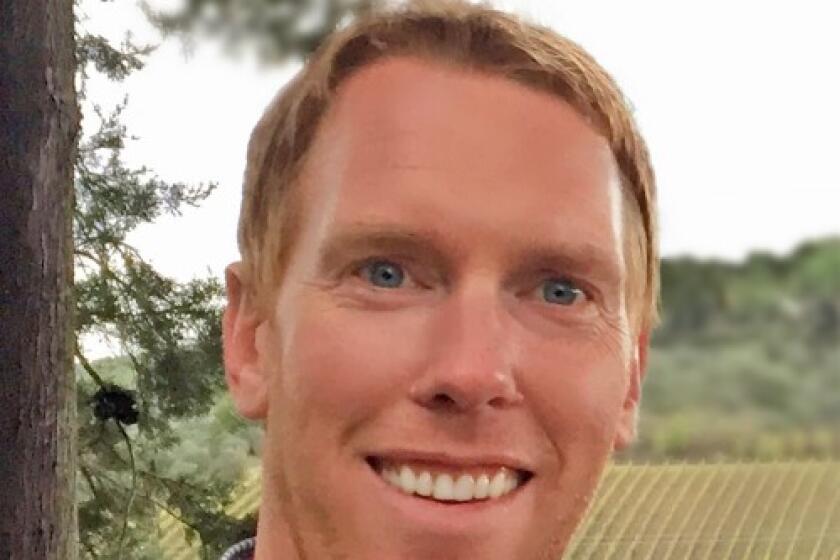
buy this photo Don Hayen of Carlsbad, a retired dermatologist, displays his Web blog, thetripover.com. Diagnosed in the early stages of Alzheimer’s disease, he decided to create the Web log to write about his condition in hopes of helping people understand the illness and how to deal with those who have it. ‘What have I got to lose?’ he says, laughing. <br><small><B> ROBERT BENSON </B>For the North County Times</small> <br><A HREF="https://secure.townnews.com/nctimes.com/forms/photo_services/linkorder.php?des= ROBERT BENSON For the North County Times / Don Hayen of Carlsbad, a retired dermatologist, displays his Web blog, thetripover.com. Diagnosed in the early stages of Alzheimer’s disease, he decided to create the Web log to write about his condition in hopes of helping people understand the illness and how to deal with those who have it. ‘What have I got to lose?’ he says, laughing. " target="new">Order a copy of this photo</A> <!— <br><A HREF="XXXXXXXXXXXXXX">More of this story</A> —> <br> <A HREF="http://www.nctimes.com/news/photogallery/" target="new">Visit our Photo Gallery</A> <br> <hr width="250">

Someday, Don Hayen's thoughts may be erratic, his memory spotty and his temperament irritable. His mind may slowly fade into a disconnected abyss where he does not recognize his family and friends and cannot care for himself, his reality darting from unfocused glimpses of the present to recreated conversations from his 72 years

Or someday there may be a cure for Alzheimer's.

In Hayen's race for his life, he will try to stay ahead of the disease by taking medicines, both approved and experimental, in hopes of slowing its progress.

"What have I got to lose?" the good-natured Carlsbad man said, laughing.

Besides the treatments, Hayen, 72, also will do one other remarkable thing on his unknown journey. He will invite people to come along.

Alzheimer's patients often suffer in silence as the disease leads them slowly into dementia. Many choose the route of Ronald Reagan, the best-known person afflicted with Alzheimer's in recent times, who was not seen publicly for years before the disease finally took his life.

That isolation can lead to misunderstandings about the illness and awkwardness when meeting those afflicted with it, Hayen believes.

"When you see someone with Alzheimer's, you think, 'Should I talk to this guy?'" Hayen said. "'Is he going to make any sense?' I suppose it's kind of what people experience when they have prejudice against them."

Hayen is writing about his thoughts, his treatments, his ups and his downs as he fights the disease in a blog, an online journal where visitors also can leave their comments about their own experience with Alzheimer's or caring for someone with the disease.

His blog can be found online at http://www.thetripover.com.

Sometimes visitors just write words of encouragement to Hayen.

"People are not comfortable discussing these diseases likely because of fear," a woman wrote in June. "Either afraid they'll eventually succumb to the disease themselves, or fearful of saying the wrong thing in front of someone who has the disease. I think it's great what you are doing. Keep it up!"

Hayen is keenly aware of the paradox of trying to write coherently about a disease that leaves its victims unable to communicate. Another Alzheimer's patient in San Diego also writes a blog, which often is rambling and disjointed.

But Hayen has the advantage of an early diagnosis and no apparent symptoms of the disease.

"I don't think anybody would recognize that I have Alzheimer's, and I don't think I've ever seen anybody in my state being interviewed with Alzheimer's," he said. "The psychiatrist said he's never seen one this early. That's OK with me."

A retired dermatologist, Hayen hopes his blog will make more people aware of the disease and its symptoms, which might lead to others detecting it early.

Since Alzheimer's cannot yet be cured or reversed, early detection is the best treatment, as some medications have shown promise of slowing its progress.

In Hayen's case, his early detection came because his daughter, Jenni Gafford, was working with Alzheimer's patients in a care facility and recognized his unusual mood swings as a possible sign of the disease.

"My daughter and my wife got together and decided something was wrong," he said.

About a year ago, his daughter and his wife, Jane, asked the doctor Hayen regularly sees for a blood disorder to question him about his temper and memory.

"I had some inkling of what as happening by then," Hayen said. "He was thinking there's something wrong with my head."

Among the tests conducted on Hayen was a positron emission tomography scan of his brain, which revealed calcification, a sign of Alzheimer's.

"That was a rough day," Gafford said about the day her father told her and her mother about his condition. "It was just a really sad day, but since then, he's just amazing."

Gafford said her father has always taught her that tragedies in life happen for a reason.

"You use tragedy in your life to get through it and help others get through it," she said. "He's told me we're in the world to help each other, and whenever we go through life's lessons, we get through them so we can help other people get through them. So this is very typical of my dad."

Gafford said her father is her best friend, and more.

"He's the bravest man I know, because he knows what's going to happen to him, and he's more concerned about his wife," she said.

Writing a life

A lifelong storyteller who relished telling his grandchildren tales about growing up in Kansas during the Depression, Hayen started writing a fictionalized account of his childhood about 12 years ago.

"I was writing newsletters and a number of articles and stuff like that," he said. "I thought I was a writer. I thought, well, I'm going to retire soon and I'll start playing around with this book. I discovered that writing fiction is so different. It's like riding a jet airplane rather than a bicycle."

After retiring in 1996, Hayen took writing classes and began working on his book, "Moonshine Harvest," which he self-published (www.booksurge.com, (866) 308-6235). The book since has won an Editor's Choice award at the 2005 San Diego State University Writers' Conference and was nominated as a finalist in the Unpublished Young Adult Competition of the 2005 San Diego Book Awards.

Hayen had learned he had Alzheimer's by time the book was released in May. He dedicated it: "May this be my legacy to my grandchildren; Kevin, Travis, Andrea, Justin, Allison and Adam, who begged for just one more story."

"The book is total fiction, but all the incidents in it are real," he said. "I've noticed when I talk to people in Kansas who read the book, they're looking to see which characters they are."

Although retired, Hayen is as busy as he's ever been. Besides writing on his blog almost daily, he also plans to write a sequel to his book.

"It makes you look at life a whole lot differently," he said about the effect the disease has had on him. "It made me aware not to waste time."

Alzheimer's is a fatal disease, but the sufferers usually live more than 10 years after its detection, Hayen said. Because it is a degenerative disease, however, Hayen knows he may not be productive in all the years ahead.

Watching for warnings

"My wife and I have vowed to each other to be honest about what's happening," Hayen said.

At the same time, the couple does not want to be oversensitive about short memory lapses that everybody experiences at times.

"We tease about which one of us has really got it," Jane said.

If the day comes when Hayen does experience signs of Alzheimer's, Jane said she wants it acknowledged.

"We decided to be more open, and hopefully he won't be frightened to admit that it might be Alzheimer's kicking in," she said.

While Jane sees no reason to join a support group for caregivers just yet, there is at least one slight adjustment she has made.

"I decided I won't use the term, 'Remember when?' anymore," she said.

Hayen has written about the anxiety of impending memory loss on his blog.

"Every forgotten chore, lost key, misplaced glasses bring a moment of pause," he wrote. "It's the same for my dear wife. She confessed she has observed moments when I seem confused or can't remember the corner to turn. She admitted to suppressing anxious questions for fear of embarrassing me. We agreed to share those moments from now on because we must analyze them

together in the light of day. Is it just old-age forgetfulness or a sign of the real thing?"

Besides sharing his personal story, Hayen hopes he may help others catch the disease early. In his blog, Hayen noted a recent report that showed that autopsies revealed brain lesions on 36 percent of a group of people in their early 80s, although no one in the group had been diagnosed with Alzheimer's.

Because brain lesions are characteristic of Alzheimer's, Hayen wrote, these people might have had the disease without knowing it.

"Because earlier diagnosis means earlier treatment and, since the disease is not curable and the only treatment is to hold off progression of the dementia, early treatment is more likely to give a longer useful life," he wrote about the need for detecting the disease.

Since getting over the shock of his own diagnosis, Hayen said, he has been at peace with his condition.

"I came to realize that everybody is going to die some day and came to a sense that it's almost a relief to know I have a terminal period," he said. "I look forward to every day. I'm much more aggressive than I have been in the past. I enjoy what I do when I'm doing it. I don't look back and wonder, 'Why did I do that?' "

Hayen said his biggest challenge has been in how to deal with people who are uncomfortable with the disease. He said humor helps to put people at ease.

"When I say I have Alzheimer's to someone, I sense a sudden shadow of concern, puzzlement and silence," he wrote. "I've learned to soften the issue quickly with a corny joke like: 'But it's not a problem. I haven't lost my keys in the last 10 minutes.' "

Contact staff writer Gary Warth at gwarth@nctimes.com or (760) 740-5410.

"Moonshine Harvest" can be bought at http://moonshineharvest.com, http://booksurge.com or http://www.amazon.com.

Discuss Print Email

/lifestyles